
Should Cardiff Businesses Build a Brand Subreddit?
Should Cardiff Businesses Build a Brand Subreddit?
Reddit has quietly become one of the most influential platforms in search, both for traditional Google results and for AI-generated answers, which frequently pull from Reddit threads when responding to questions about recommendations, honest opinions, and real experiences. This has led some businesses, mostly larger ones so far, to experiment with building their own branded subreddit. But is this actually a sensible move for a local Cardiff business, or an unnecessary distraction? This post walks through what a brand subreddit actually involves, the genuine pros and cons, and how to decide whether it's worth your time.
Why Reddit Matters So Much for Search Right Now
Google has increasingly favoured Reddit content in its search results over the past few years, often placing Reddit threads prominently for queries where people are looking for genuine opinions or recommendations rather than polished marketing copy. Terms like "best" or "honest review" frequently surface Reddit discussions near the top of the page.
This pattern extends into AI-generated search results too. AI tools have learned that Reddit often contains exactly the kind of unfiltered, first-hand community discussion that makes for a credible, well-rounded answer, particularly for questions where people want a real opinion rather than a brand's own description of itself.
For businesses, this shift means being present and genuinely engaged with is worth something, on Reddit specifically, and not just on your own website or social media channels.
What Is a Brand Subreddit, Exactly?
A brand subreddit is a dedicated community space on Reddit, created and moderated in some capacity by a business, where customers, fans, or interested parties can discuss the brand, ask questions, share experiences, and interact somewhat more directly with the company.
This is quite different from a business simply having a presence on Reddit through occasional posting or replying in existing subreddits. A dedicated subreddit is a bigger commitment: it needs genuine, ongoing moderation, real engagement from actual people (not obviously scripted marketing responses), and a community that's actually large and active enough to be worth the effort.
The Genuine Benefits
Direct, authentic engagement with your audience. A well-run brand subreddit gives you a direct channel to hear honest feedback, questions, and concerns from people genuinely interested in your business, often more candidly than they'd share through a formal contact form or review platform.
A potential source of the kind of content AI tools favour. Genuine discussion threads, complete with real questions and detailed answers, are exactly the kind of first-hand, credible content that both traditional search and AI tools have shown a preference for surfacing.
Community loyalty and word-of-mouth. For brands with a genuinely engaged customer base, a dedicated community space can deepen loyalty and turn satisfied customers into active advocates who help answer other people's questions organically.
The Real Challenges
It requires genuine, ongoing effort. A subreddit that goes quiet after a promising launch does more harm than good, signalling a lack of real engagement rather than an active, thriving community. This isn't a "set it up and walk away" project.
Reddit's culture is genuinely allergic to obvious marketing. Reddit communities, more than most platforms, are quick to call out and reject content that feels like thinly veiled advertising. A brand subreddit that feels like a marketing channel rather than a genuine community space is likely to be met with scepticism, or simply ignored.
It may not be the right fit for every business. Realistically, most small, local service businesses (say, a local plumber or a hairdresser) don't have a large enough or engaged enough audience to sustain a genuinely active dedicated subreddit. This tactic tends to make more sense for brands with a broader, more passionate customer base, or a genuinely distinctive product or service people naturally want to discuss.
A More Realistic Starting Point for Most Cardiff Businesses
For the vast majority of local businesses, building and maintaining a dedicated subreddit from scratch is probably more effort than it's worth right now. A more practical, lower-risk starting point is to engage genuinely and helpfully within existing, relevant subreddits.
This might mean:
- Regularly checking subreddits like r/Cardiff or industry-specific communities relevant to your services
- Answering genuine questions helpfully when your expertise is relevant, without pushing your business overtly
- Only mentioning your business when it's genuinely relevant and adds value, rather than as a blatant plug
- Building a bit of a reputation as a knowledgeable, trustworthy community member over time
This kind of light-touch, genuine engagement can build real credibility and occasional visibility without the heavier commitment of running your own dedicated community space.
Signs Your Business Might Be Ready for a Dedicated Subreddit
If you're seeing consistent, organic mentions of your business already happening in existing subreddits, if customers frequently reach out with detailed questions or want to discuss your products or services at length, and if you genuinely have the resources to commit to regular moderation and engagement, a dedicated subreddit could be worth testing. Start small, be patient, and treat it as a genuine community first and a marketing channel a distant second.
Getting the Basics Right Before Reddit
Before investing time into a more ambitious Reddit strategy, it's worth making sure your core SEO foundations, your website, your Google Business Profile, your existing content, are solid. Reddit engagement works best as a complement to strong fundamentals, not a replacement for them.
If you'd like help figuring out where Reddit and community engagement genuinely fit into your broader marketing plan, or you'd rather focus first on strengthening the fundamentals, the team at OmniSEO is happy to talk through what makes sense for your specific business and audience.


How to Monitor Trending Topics to Win More AI Citations
How to Monitor Trending Topics to Win More AI Citations
Being early to a genuinely useful conversation has always been valuable in marketing, but it matters even more now that AI search tools are actively looking for fresh, well-covered information to pull into their answers. If you can be one of the first credible voices to properly cover a topic that's just starting to trend, you have a real shot at becoming one of the sources an AI tool leans on when people start asking about it. This post walks through why trend monitoring has become a genuine SEO tactic, and practical ways to build it into your content routine, even without a big marketing team.
Why Trending Topics Matter More Than They Used To
In the past, chasing trending topics was mostly the territory of large news publishers trying to capture a short burst of search interest. For most small and local businesses, it made more sense to focus purely on evergreen content, the kind of information that stays useful and searched for over years rather than days.
Evergreen content is still hugely valuable, and it should remain the backbone of most content strategies. But AI search tools have changed the calculation slightly. These systems are increasingly good at pulling in fresh, recently published content to answer questions about emerging topics, new regulations, seasonal shifts, or industry changes. If you can publish clear, genuinely useful content early on a topic that's gaining traction, you have a real window to become one of the go-to sources an AI tool cites while that topic is actively being searched.
This doesn't mean chasing every fleeting trend. It means paying attention to the topics that are genuinely relevant to your industry and audience, and being ready to cover them properly and promptly when they emerge.
How to Actually Spot Relevant Trends
You don't need expensive enterprise software to do this well. Here are some accessible ways to keep an eye on what's starting to gain traction in your industry.
1. Google Trends. This free tool shows you how search interest in specific terms has changed over time, and can highlight related, rising queries you might not have thought of. Checking it periodically for terms relevant to your industry (say, "SEO for small business" or "Google update" if you're in digital marketing) can reveal genuine upticks worth investigating.
2. Industry news sites and newsletters. Subscribing to a handful of genuinely reputable sources in your field means you'll naturally spot emerging conversations before they fully peak. This doesn't need to be a huge list, three or four well-chosen sources checked consistently will serve you better than dozens skimmed occasionally.
3. Social listening on relevant platforms. Keeping half an eye on what's being discussed in relevant Facebook groups, LinkedIn threads, or Reddit communities related to your industry or local area often surfaces emerging questions and concerns well before they show up in formal search data.
4. Your own customer questions. Pay attention to what customers are actually asking you, particularly if you notice the same new question coming up repeatedly over a short period. This is often one of the clearest early signals that something worth writing about is starting to gain wider attention.
5. Google Search Console. If you already have some traffic, check your Search Console data periodically for queries that are suddenly appearing or climbing that weren't showing up before. This can reveal emerging interest directly tied to your existing content and audience.
Turning a Trend Into a Genuinely Useful Piece of Content
Spotting a trend early is only half the job. What you do with it matters just as much.
Move quickly, but not carelessly. There's real value in being one of the first credible sources to properly cover a new development, but rushing out a thin, poorly researched piece just to be first can backfire, both for your reputation and for how useful the content actually is to an AI tool trying to extract accurate information.
Add genuine local or specific context. If a broader industry trend is emerging (say, a change to Google's local search algorithm), consider what it specifically means for your audience. A generic rehash of the same information available everywhere else is far less likely to stand out than a piece that clearly translates the trend into what it means for, say, Cardiff-based small businesses specifically.
Update the piece as the trend develops. Trending topics often evolve over days or weeks as more information becomes available. Rather than publishing once and moving on, consider treating your initial coverage as a living document you update as the situation develops, which also signals ongoing relevance and accuracy to search engines and AI tools alike.
Don't force a trend connection where none genuinely exists. If a trending topic doesn't have a real, honest connection to your business or expertise, forcing the angle tends to read as opportunistic rather than useful, and audiences (and increasingly AI systems) are good at spotting that.
Balancing Trends With Evergreen Content
It's worth being clear that chasing trends should be a smaller, complementary part of your overall content strategy, not the main focus. Evergreen content, the genuinely comprehensive guides and resources covering the core, consistently searched topics in your industry, remains the foundation that builds long-term authority and traffic.
Think of trend-focused content as a way to occasionally demonstrate that your business is actively engaged and current, layered on top of that steady, reliable evergreen foundation, rather than a replacement for it.
Building This Into a Sustainable Routine
For most small businesses, the realistic approach is setting aside a small, regular block of time, even just thirty minutes a week, to check a couple of trend sources and jot down anything worth investigating further. This doesn't need to become a major operational burden to be genuinely useful over time.
If keeping on top of this alongside everything else feels like a stretch, that's exactly the kind of ongoing work an SEO partner can help take off your plate. At OmniSEO, we help Cardiff businesses build sustainable content routines that balance strong evergreen foundations with timely, well-researched coverage of genuinely relevant industry developments. Get in touch if you'd like help building that kind of system for your business.
AI Citations vs AI Mentions: What's the Difference and Why It Matters
AI Citations vs AI Mentions: What's the Difference and Why It Matters
As more businesses start paying attention to how they show up in AI-generated search results, a couple of terms keep coming up: AI citations and AI mentions. They sound similar, and it's easy to assume they mean roughly the same thing. They don't, and understanding the difference matters if you're trying to track whether your efforts to improve AI visibility are actually working. This post breaks down what each one actually means, how to tell them apart, and why the distinction should shape how you measure success.
What Is an AI Citation?
An AI citation is when a tool like Google's AI Overview or an AI search assistant directly and visibly credits your website as a source for information in its response, typically with a clickable link. This is the clearest, most valuable form of AI visibility, since it usually comes with a direct path back to your website and clear proof that your content was recognised as authoritative enough to name explicitly.
Citations tend to appear as small linked references alongside or underneath an AI-generated answer, similar in spirit to a footnote. If someone asks an AI tool "what's the best way to structure a Google Business Profile," and the response includes a visible link back to a specific guide on your website, that's a citation.
What Is an AI Mention?
An AI mention is a broader, looser category. This is when your brand name, your business, or specific information clearly drawn from your content appears within an AI-generated answer, but without a direct, visible link crediting you as the source. The AI tool has used information associated with your business or content in forming its answer, but hasn't necessarily made it obvious, or easy, for the person reading to trace that information back to you and click through.
Mentions can still carry real value. If an AI tool says "many local agencies, including OmniSEO, recommend focusing on Google Business Profile optimisation first," your brand name is out there, being associated with credible advice, even without a link attached. But the direct traffic and conversion opportunity is far weaker than with a proper citation.
Why the Difference Matters for Measuring Success
If you're only tracking whether your website appears as a linked citation, you might be underestimating your actual AI visibility, since plenty of valuable brand exposure could be happening through mentions that don't show up as neatly in analytics or tracking tools.
On the other hand, if you're only tracking loose brand mentions without distinguishing them from genuine citations, you might overestimate how much real traffic and conversion value your AI visibility efforts are generating, since mentions alone often don't drive the kind of direct action a citation with a link can.
Getting a clear read on both, ideally through a combination of manual checking (asking AI tools relevant questions yourself and noting how you're referenced) and any available AI visibility tracking tools, gives a much more honest picture of where you actually stand.
Which One Should You Prioritise?
Ideally, you want both, but they call for slightly different strategic focuses.
To improve your chances of genuine citations, focus on the fundamentals covered in our piece on getting featured in ChatGPT and AI Mode: clear, well-structured, genuinely useful content that directly answers specific questions, hosted on a technically sound, crawlable website, backed by real topical authority.
To improve your chances of broader mentions, focus more on general brand recognition and association with your area of expertise across the web. This includes being active and consistently mentioned in local press, industry roundups, review platforms, social media discussions, and community forums like local Facebook groups or Reddit threads relevant to your industry. The goal here is less about a single perfectly optimised page and more about your business name becoming genuinely associated with your area of expertise across many different corners of the internet.
A Realistic Way to Track This Yourself
You don't necessarily need expensive specialist tools to get a rough sense of where you stand. Set aside some time each month to ask AI tools like ChatGPT and Google's AI Mode a handful of realistic questions your potential customers might genuinely ask, related to your services and location. Note down:
- Whether your business is mentioned at all
- Whether it's cited with a visible link, or just referenced in passing
- How your business is described (accurately? favourably? outdated?)
- Which competitors are showing up alongside or instead of you
Doing this consistently over time gives you a genuinely useful, if informal, sense of trend direction, even without sophisticated tracking software.
The Bigger Point Here
Both citations and mentions matter, but for different reasons. Citations are closer to the traditional SEO goal of driving direct clicks and traffic. Mentions function more like brand-building and word-of-mouth reputation, valuable, but harder to measure in a straight line back to revenue.
Businesses that focus purely on chasing citations while ignoring their broader online reputation and brand presence often miss a significant chunk of the value available in this new landscape of search behaviour. The two work together, and a genuinely strong AI visibility strategy pays attention to both.
Want Help Making Sense of Your AI Visibility?
If you're curious where your business actually stands across both citations and mentions, and what specific steps would move the needle for your industry, our team at OmniSEO can talk you through a straightforward assessment. It's a fairly new area of measurement, but the fundamentals of good, honest SEO still apply, and we're happy to help you make sense of it.
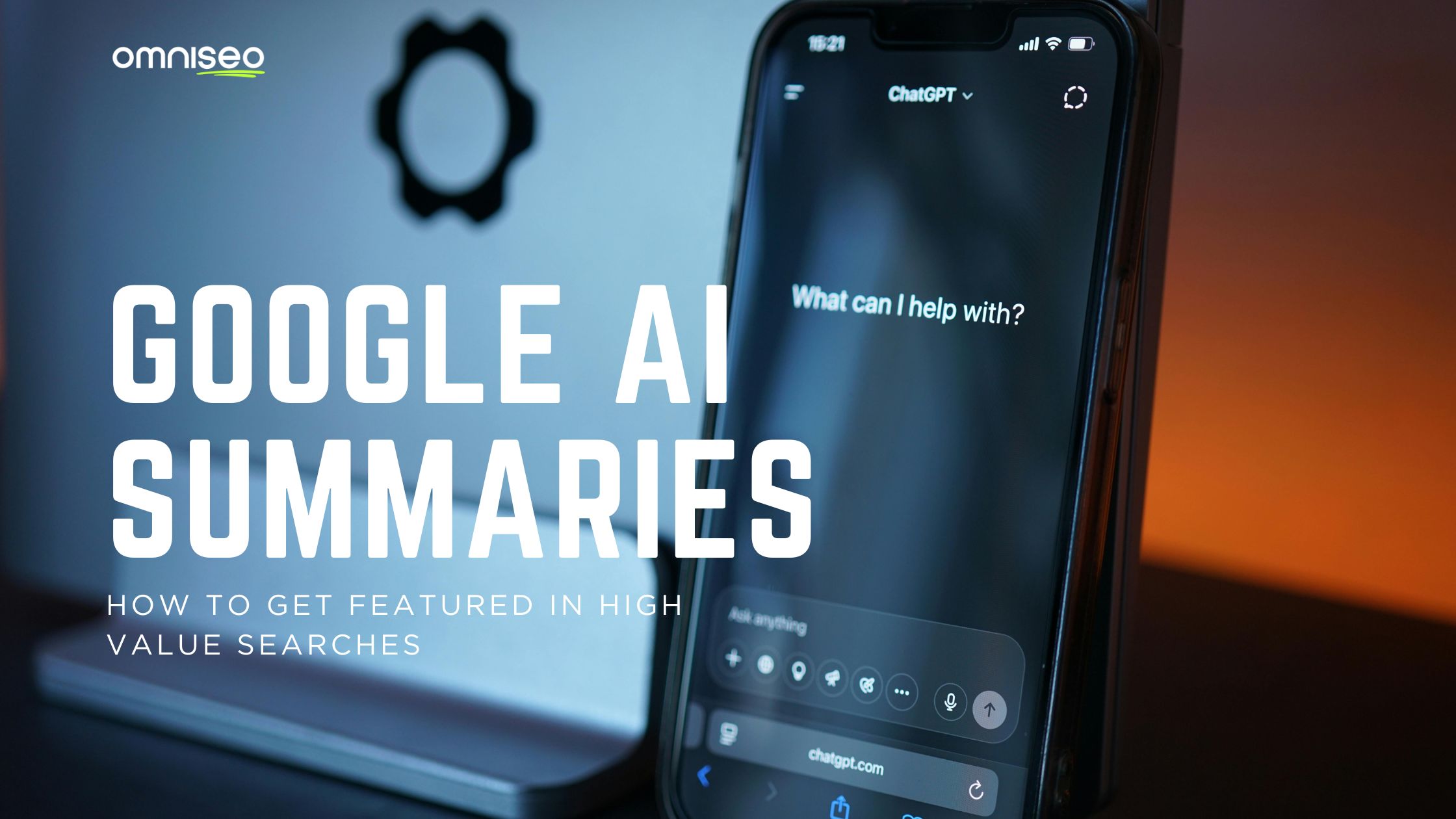
How to Get Featured in ChatGPT and Google's AI Mode
How to Get Featured in ChatGPT and Google's AI Mode
More and more people are researching decisions, from where to eat to which local business to hire, by asking AI tools directly rather than typing a query into a traditional search box. ChatGPT, Google's AI Mode, and similar tools are becoming genuine discovery channels in their own right. If your business isn't showing up when these tools are asked relevant questions, you're missing out on a growing slice of how customers find businesses like yours. This post covers what actually influences whether these tools mention your business, and practical steps to improve your chances.
How These Tools Actually Decide What to Mention
It helps to understand, at a basic level, how these systems work. Tools like ChatGPT and Google's AI Mode don't have a single, fixed answer stored for every possible question. For many queries, especially ones involving current, local, or specific information, they search the web in real time (or draw on recently indexed content) and then generate a response based on what they find, often citing a handful of sources along the way.
This means the same fundamental principles that help a website rank well in traditional search also strongly influence whether it gets pulled into an AI-generated answer. Being crawlable, having clear and well-organised content, and being seen as a credible source on your topic all matter enormously here.
There's an added layer, though. These AI systems tend to favour content that answers questions clearly, concisely, and directly, since that's exactly the kind of material that's easiest for them to extract and repurpose into a natural-sounding response.
Practical Steps to Improve Your AI Visibility
1. Make sure your website is actually crawlable and indexed. This sounds basic, but it's worth checking. If your site has technical issues blocking search engines from properly crawling and indexing it, you have no chance of appearing in AI-generated answers, regardless of how good your content is. A technical SEO audit can quickly reveal whether this is holding you back.
2. Answer questions directly and clearly, especially early in your content. AI tools favour content that gets to the point. If someone might ask "what's the best time to book a wedding photographer in Cardiff," having a clear, direct answer near the top of a relevant page (before going into more nuanced detail further down) makes that content far easier for an AI system to lift and use accurately.
3. Use structured formatting. Headings, bullet points, numbered steps, and clear paragraph breaks all help both search engines and AI systems parse your content accurately. Dense walls of text are much harder to extract clean, accurate information from.
4. Build genuine topical authority, not just isolated pages. As covered in more detail in our piece on topic clusters, AI systems favour sources that demonstrate broad, connected expertise on a subject rather than a single standalone page. If your website only has one page loosely related to a topic, it's a weaker candidate for citation than a site with a well-developed cluster of genuinely useful, connected content.
5. Keep your information current. AI tools, particularly those that pull from recently crawled content, favour up-to-date information. If your pricing, service details, or industry information is outdated, it becomes both less useful and less trustworthy as a source. Regularly reviewing and refreshing key pages helps here.
6. Strengthen your presence beyond your own website. Mentions, reviews, and citations from other credible websites (local directories, industry publications, review platforms) all help establish your business as a genuine, recognised entity, which increases the chances that an AI tool considers you a reliable source when generating an answer related to your industry or location.
7. Claim and optimise your Google Business Profile fully. For local queries specifically, Google's AI Mode leans heavily on Business Profile data, reviews, and location information. A complete, accurate, well-reviewed profile significantly improves your chances of being surfaced for local, AI-assisted searches.
What Doesn't Work Here
It's worth being upfront that there's no reliable way to directly "buy" or force your way into an AI-generated answer the way you might with a paid search advert. These systems generate responses based on genuine assessments of relevance and credibility drawn from real content and data. Any service promising guaranteed AI citations through shortcuts or manipulation tactics should be treated with real scepticism, since this space is still evolving and these systems are specifically designed to resist manipulation.
The sustainable path here is the same one that's always underpinned good SEO: build genuinely useful, well-organised, trustworthy content and maintain a credible, consistent online presence. AI visibility is best understood as a natural extension of strong fundamentals, not a separate hack to chase.
Setting Realistic Expectations
It's also worth remembering that AI visibility, much like traditional SEO, tends to build gradually rather than overnight. Making the changes above won't guarantee an instant appearance in ChatGPT's next answer to a relevant question, but it steadily improves your odds over time, particularly as these systems continue to refine how they identify credible sources.
For local Cardiff businesses, this is genuinely good news. It means the same disciplined, honest approach to building your online presence, useful content, strong local signals, real credibility, pays off across both traditional search and this newer generation of AI-driven discovery.
Want a Clear Plan for AI Visibility?
If you're not sure where your website currently stands when it comes to being crawlable, structured well, and positioned as a credible source, we're happy to take a proper look. At OmniSEO, we build AI visibility into our broader SEO strategy for Cardiff businesses, rather than treating it as a separate afterthought. Reach out whenever you'd like a straightforward assessment of where you stand.

Ghost Citations: Why AI Search Cites Your Content but Not Your Brand
Ghost Citations: Why AI Search Cites Your Content but Not Your Brand
Here's a frustrating scenario that's becoming increasingly common. You check an AI search tool, ask it a question closely related to your business, and discover that it's actually using information from your website to build its answer. The facts, the phrasing, even the structure feel familiar. But your brand name is nowhere to be seen. You've been quietly used as source material without getting the recognition, or the click, that should come with it. In the industry, this is sometimes called a "ghost citation," and it's a growing concern for businesses trying to build visibility in an AI-driven search world.
What Exactly Is a Ghost Citation?
A ghost citation happens when an AI system draws on the substance of your content, your explanations, your specific data points, your unique framing of a topic, without clearly crediting you as the source, or without that credit being visible enough for anyone to notice or act on it.
This differs from a straightforward citation, where a tool like Google's AI Overview or ChatGPT clearly names and links to your website as the source of a fact or quote. A ghost citation is more like being paraphrased into invisibility. The value you created gets absorbed into the answer, but your brand doesn't travel along with it.
Why Does This Happen?
AI systems are trained to synthesise information from many sources into a single, coherent answer. In doing so, they often blend facts and phrasing from multiple places rather than presenting a single source's explanation word for word. If your content happens to be one of several sources an AI model draws on for a particular topic, your specific contribution can get diluted into a general, uncredited blend.
This is more likely to happen with content that states facts or explanations in a fairly generic, easily rephrased way. If your unique insight can be easily rewritten by an AI system without losing anything specific to your brand, it's easier for that system to absorb your contribution without needing to credit you directly.
Why This Matters for Your Business
For years, the working assumption in SEO was that ranking well, or being featured in a snippet, meant a fairly direct and visible reward: a click, a visitor, potential business. Ghost citations disrupt that logic. Your expertise and effort might be actively fuelling AI-generated answers that thousands of people see, while your business gets none of the recognition or traffic that would normally follow.
Over time, this can quietly undermine the return on investment of content marketing if it's not accounted for and addressed. It's not a reason to give up on creating good content, but it is a reason to think more carefully about how that content is structured and protected.
How to Reduce the Risk of Being Ghost-Cited
1. Build content around genuinely unique data or perspective. The more your content contains something that can't easily be found or rephrased elsewhere, original research, specific local data, a distinctive framework or methodology you've developed, the harder it becomes for an AI system to paraphrase it without it being clearly traceable back to you.
2. Use clear, ownable naming for your frameworks or approaches. If you've developed a particular way of explaining or approaching a topic, give it a specific name and use it consistently. This makes it much easier for both search engines and AI tools to associate that specific idea with your brand, rather than treating it as generic industry knowledge.
3. Strengthen your entity signals. As covered in our piece on entity-first SEO, making sure your brand is clearly and consistently associated with your area of expertise across the web (through schema markup, consistent business information, and mentions on other credible sites) increases the chances that AI systems recognise and credit you specifically, rather than treating your content as anonymous background information.
4. Monitor how AI tools are actually using your content. It's worth periodically asking AI tools direct questions related to your core topics and checking whether your business is mentioned, and if so, how prominently. This kind of manual checking, while a little tedious, gives you a real sense of your current AI visibility rather than relying on guesswork.
5. Keep publishing high-quality, well-structured content anyway. Even accounting for the risk of ghost citations, visibility in AI search still correlates strongly with having genuinely useful, well-organised content published consistently. Businesses that stop producing content out of frustration with this issue tend to lose ground on both traditional rankings and AI visibility, which is the worse outcome.
A Reasonable Way to Think About This
Ghost citations are a real and valid concern, but they shouldn't become a reason to abandon content strategy altogether. Think of it a bit like word-of-mouth marketing before the internet existed. Good advice and good businesses got talked about and recommended constantly, often without a formal, trackable "citation" attached. Some of that value was always somewhat invisible, and smart businesses focused on being genuinely good at what they did rather than obsessing over tracking every single mention.
The difference now is that some of that invisible value can be nudged back into visibility with the right structural and strategic choices, even if it can never be guaranteed.
Getting Proper Visibility for Your Expertise
If you're concerned that your content might be feeding AI-generated answers without your business getting proper credit or traffic in return, it's worth having a proper look at how your content is structured and how discoverable your brand identity actually is. At OmniSEO, we help Cardiff businesses build content and technical foundations designed to maximise both traditional rankings and genuine, attributable AI visibility. Get in touch if you'd like an honest assessment of where you currently stand.

AI Overviews vs Featured Snippets: What Cardiff Businesses Need to Know
AI Overviews vs Featured Snippets: What Cardiff Businesses Need to Know
If you've searched anything on Google recently, you've probably noticed a large block of AI-generated text sitting right at the top of the results page, often before you even see a traditional list of blue links. This is Google's AI Overview feature, and it has changed the way people find and interact with information online. For years, businesses have chased "featured snippets," the highlighted answer boxes that used to sit at the top of results. Now there's a new, more dominant format to understand. This post breaks down the difference between the two, what the data tells us about how they affect traffic, and what it means for how you approach your website content.
What Are Featured Snippets?
Featured snippets have been around for years. They're the boxed answers you see at the top of some search results, usually pulling a short paragraph, a list, or a table directly from a specific web page, along with a link to that page. If you've ever searched "how long does a cold last" and seen a neat answer box with a link underneath, that's a featured snippet.
Crucially, featured snippets always credit and link to a single source page. Even though the answer appears directly in the search results, the business behind that content still gets visible attribution and, often, a decent number of clicks from curious searchers wanting more detail.
What Are AI Overviews?
AI Overviews are a newer, more complex feature. Rather than pulling a single answer from one page, Google's AI system generates a synthesised response by drawing on multiple sources at once, blending information together into a conversational summary. Sources are usually credited with small links, but they're often less prominent than a featured snippet's link, and the overview itself may fully answer the searcher's question without them needing to click through to any website at all.
This is the crucial difference. A featured snippet tends to draw a curious click. An AI Overview often satisfies the search entirely on the results page itself.
What the Data Actually Shows
This shift has real, measurable consequences for website traffic. Multiple studies tracking click-through rates have found that pages appearing in AI Overviews see noticeably lower click rates compared to when the same query previously triggered a traditional featured snippet or a standard set of blue links. In some cases, the reduction in clicks has been substantial, particularly for straightforward informational queries where the AI Overview genuinely answers the question in full.
This doesn't mean visibility in AI Overviews is worthless. Being cited as a source still carries real brand value and can build trust, even if the click doesn't always follow immediately. But it does mean businesses relying purely on informational content to drive direct website traffic need to rethink their expectations and strategy.
What This Means for Different Types of Queries
Not all searches are affected equally. Simple factual questions ("what time does the library close," "how many ounces in a pound") are the queries most likely to be fully answered by an AI Overview, with little reason for anyone to click further.
More complex, nuanced, or commercially-driven searches behave differently. Someone searching "best accountant for a small business in Cardiff" or "how much does a kitchen renovation cost" is usually looking for more than a quick fact. They want comparisons, local options, pricing detail, and reassurance, things an AI Overview typically can't fully satisfy on its own. These types of searches still send meaningful traffic to well-optimised business websites.
This is an important distinction for local businesses in particular. Purely informational blog content aimed at very simple questions may see reduced direct traffic value going forward. Content aimed at helping someone make a decision, compare options, or take an action still holds strong value, both for rankings and for genuine business results.
How to Adjust Your Content Strategy
1. Focus more on decision-stage content. Rather than writing content purely to answer simple factual questions, focus more energy on content that helps people choose, compare, and decide. Buying guides, comparison pages, case studies, and local service pages tend to hold up much better against AI Overview competition than purely factual explainer content.
2. Don't abandon informational content entirely. Being cited in an AI Overview still has genuine brand value, even without a guaranteed click. It builds recognition and trust over time, and for competitive topics, being one of the credited sources is still far better than not appearing at all.
3. Structure your content clearly for extraction. Both featured snippets and AI Overviews favour content that's clearly structured with headings, concise definitions, and well-organised lists. Writing with this clarity in mind gives you a better chance of being pulled into either format.
4. Strengthen your other traffic channels. If a portion of your informational search traffic is likely to decline over time, it makes sense to diversify. This might mean putting more effort into email marketing, local partnerships, social media, or paid search for your most commercially valuable terms.
5. Track the right metrics. Rather than only watching keyword rankings, keep an eye on actual click-through rates and conversions for your key pages. A drop in clicks for a ranking you still hold might well be explained by an AI Overview appearing above it, and understanding this helps you make sense of what your analytics are actually telling you.
The Bigger Shift Behind All of This
What's happening here reflects a broader change in how people use search engines. Increasingly, simple questions get answered instantly without a website visit, while more complex, high-value decisions still require genuine research, comparison, and trust-building, exactly the kind of work a well-built website and good content can support.
For Cardiff businesses, this means the winning strategy isn't to chase every keyword indiscriminately, but to focus resources where a website visit and a genuine connection with a potential customer still make a real difference.
Need Help Reworking Your Content Strategy?
Understanding exactly which of your pages are losing clicks to AI Overviews, and which topics are still worth investing in, takes proper analysis of your specific traffic data. If you'd like a clear, honest look at where your website stands and how to adjust, the team at OmniSEO would be happy to talk you through it.

How to Build Topic Clusters That Get Cited by AI
How to Build Topic Clusters That Get Cited by AI
If you've noticed AI tools like ChatGPT or Google's AI Overviews confidently answering questions and pointing to certain websites as sources, you've probably wondered how those sites earned that spot. It's rarely luck. More often than not, those sites have built what's called a topic cluster: a structured group of connected pages that together demonstrate real, thorough knowledge of a subject. This post explains what topic clusters are, why they matter more than ever for AI visibility, and how you can start building them for your own website.
What Is a Topic Cluster?
A topic cluster is a group of related pages built around one central subject, usually anchored by a broad "pillar" page and supported by several narrower pages that each dig into a specific aspect of that subject.
For example, imagine you run an SEO agency in Cardiff. Your pillar page might be a comprehensive guide titled "SEO for Cardiff Businesses: The Complete Guide." Around that, you'd build supporting pages covering specific pieces of the puzzle: local SEO, technical audits, content strategy, link building, and Google Business Profile optimisation. Each supporting page links back to the pillar page, and the pillar page links out to each supporting page, creating a clearly connected web of content.
This structure does two things. It helps human visitors navigate naturally from a broad overview to the specific detail they need, and it helps search engines and AI tools understand that your website has genuine, comprehensive expertise on the topic, rather than one isolated page written in a vacuum.
Why This Matters So Much for AI Search
Traditional search engines rank individual pages. AI tools work a little differently. When an AI system is generating an answer, it's often trying to piece together a complete, accurate response from multiple sources, and it favours sources that demonstrate depth and internal consistency across a subject rather than a single disconnected page.
Think about it from the AI's perspective. If it needs to answer a detailed question about local SEO, and it finds a website with one thin page briefly mentioning the topic, that's a weak source. But if it finds a website with a well-organised cluster of pages covering the topic from multiple angles, each one clearly linked and consistent with the others, that's a much stronger signal of genuine authority. It's the difference between asking a random person a question and asking someone who has clearly spent years studying and writing about the subject.
This is also why topic clusters tend to perform well for traditional rankings too. Google has long favoured websites that show real depth on a subject over those that scatter thin content across unrelated topics.
How to Plan Your First Topic Cluster
Building a topic cluster doesn't need to be overwhelming. Here's a practical way to approach it.
1. Choose a broad topic that matters to your business. This should be something genuinely central to what you do, not a tangential idea. If you're a local accountant, your pillar topic might be "Small Business Accounting in Cardiff," not something unrelated like general financial news.
2. Map out the subtopics people actually ask about. Use tools like Google's "People Also Ask" boxes, AnswerThePublic, or simply your own experience of customer questions to list out the specific areas your audience wants to know about. For an accountant, that might include tax deadlines, bookkeeping software, VAT registration, and payroll management.
3. Write your pillar page first, but keep it broad. The pillar page should give a solid overview of the whole topic without trying to cover every detail. Think of it as a well-organised table of contents that's also genuinely useful to read on its own.
4. Build out supporting pages one at a time. Rather than trying to write everything at once, tackle one supporting page per week or month, whatever's sustainable for your business. Each one should go into proper depth on its specific subtopic and link clearly back to the pillar page.
5. Link consistently and logically. Every supporting page should link to the pillar page and, where relevant, to other supporting pages that cover closely related ground. This is often the step people skip, but it's what actually creates the "cluster" effect rather than just a pile of separate blog posts.
6. Keep it updated. Topic clusters aren't a one-off project. As your industry changes or new questions emerge, add new supporting pages or update existing ones. This keeps the cluster current and shows both search engines and AI tools that the information is actively maintained.
Common Mistakes to Avoid
A few things can undermine an otherwise good topic cluster strategy.
Spreading yourself too thin across topics that don't connect. If your supporting pages don't clearly relate back to your central pillar topic, you end up with a scattered blog rather than a genuine cluster. Focus on depth in a few core areas rather than breadth across everything.
Forgetting internal links. This is the glue that holds a cluster together. Without it, you just have a collection of unconnected pages that happen to be about similar things.
Duplicating content across pages. Each page in the cluster should cover its specific angle without repeating large chunks of text found elsewhere on the site. Overlap confuses both readers and search engines about which page is the authority on a given point.
Neglecting the pillar page over time. It's common to build supporting content diligently while letting the pillar page go stale. Since it's often the most-visited page in the cluster, it deserves regular attention too.
A Realistic Timeline
Building a genuinely strong topic cluster from scratch usually takes a few months rather than a few weeks, especially if you're doing it alongside running a business. That's completely normal. The value comes from consistency and depth, not speed. A cluster of eight or ten genuinely thorough, well-linked pages will outperform fifty scattered, shallow blog posts almost every time, both for traditional rankings and for the kind of authority that gets you noticed by AI tools.
Where OmniSEO Can Help
Planning and building a topic cluster from the ground up takes time, research, and a fair amount of writing, which is often the part that gets pushed to the bottom of the to-do list when you're busy running a business. If you'd like help mapping out a cluster strategy for your website, or turning your existing scattered blog posts into a properly connected structure, our team at OmniSEO would be glad to walk you through what that could look like for your specific industry and goals.

What Is Semantic Depth and Why Does it Beat Keyword Stuffing?
What Is Semantic Depth and Why Does it Beat Keyword Stuffing?
If you've been running a website for more than a few years, there's a good chance you remember (or still practice) the old approach to SEO: pick your target keyword, repeat it as often as you can get away with, and hope Google notices. For a while, that actually worked. Those days are firmly behind us. Today, search engines are far more interested in something called semantic depth, and understanding what that means could be the difference between content that ranks and content that quietly sits on page four of Google forever.
This post will explain what semantic depth actually is, why keyword stuffing stopped working (and can even hurt you), and how to write content that genuinely satisfies both search engines and the humans reading it.
A Quick History Lesson: Why Keyword Stuffing Used to Work
In the early days of search engines, ranking algorithms were relatively simple. They counted how often a word or phrase appeared on a page and used that as a rough signal of relevance. If you wanted to rank for "wedding photographer Cardiff," the logic was straightforward: cram that exact phrase into your title, your headings, your image alt text, and your body copy as many times as you could without the page reading like nonsense (and sometimes even then).
This created an obvious problem. Content written for algorithms rather than people tends to read badly. It's repetitive, unnatural, and often unhelpful, because the writer's main goal was pleasing a piece of software rather than answering a real question.
Google noticed this too, eventually, and its algorithms evolved significantly to combat it. Updates over the years have specifically targeted thin, repetitive, keyword-stuffed content, pushing it further down the rankings rather than rewarding it.
So What Is Semantic Depth?
Semantic depth refers to how thoroughly and meaningfully a piece of content covers a topic, including all the related concepts, questions, and context a reader would reasonably want to understand it fully. Rather than asking "does this page mention the keyword enough times," modern search algorithms ask something closer to "does this page genuinely explain this topic in a way that would satisfy someone who searched for it?"
Think about the difference between these two approaches to a blog post about "how to choose an SEO agency":
A shallow, keyword-focused version might repeat "choose an SEO agency" a dozen times, list three generic tips, and call it done. It technically contains the keyword, but it doesn't actually help anyone make a decision.
A semantically deep version would cover the actual questions someone has when trying to choose an agency: what different pricing models look like, what red flags to watch for, what questions to ask in a first meeting, how to interpret case studies, what a realistic timeline for results looks like, and how local versus national agencies might differ. It naturally uses variations of the topic (like "SEO provider," "search marketing partner," "digital marketing agency") because that's how people actually write and speak about the subject, not because a keyword tool told it to.
Google's language models are now sophisticated enough to recognise the difference between these two approaches almost instantly. The second version demonstrates real understanding of the topic. The first one is just going through the motions.
Why This Matters Even More With AI Search
This shift towards rewarding depth over repetition has become even more important with the rise of AI-generated answers, like Google's AI Overviews or tools like ChatGPT. These systems are trying to synthesise accurate, comprehensive answers from the content they find. A page with genuine semantic depth gives them much more useful material to draw from and cite. A thin, keyword-stuffed page simply doesn't offer enough substance to be useful as a source.
In other words, if you want your content to have a chance of being referenced in an AI-generated answer, and increasingly this matters for visibility, it needs to actually contain the depth of information a comprehensive answer would require.
How to Build Semantic Depth Into Your Content
The good news is that writing with semantic depth doesn't require any special software or technical skill. It requires a genuine understanding of your topic and your audience's real questions. Here's how to approach it practically.
1. Start with the questions, not the keyword.
Before writing, list out every question a real person might have about the topic. If you're writing about "SEO audits," that might include: what does an audit actually check? How long does one take? What happens after you get the results? How much should it cost? What's the difference between a technical audit and a content audit? Answering these thoroughly naturally builds depth.
2. Cover related subtopics, not just the core one.
A genuinely deep piece of content acknowledges the topics that sit next to the main one. A post about local SEO for Cardiff businesses might naturally touch on Google Business Profile optimisation, customer reviews, and local link building, because these are all part of the same broader picture. You don't need to write a full guide to each, but acknowledging them and linking to further reading shows real command of the subject.
3. Use natural language variation.
Rather than repeating your exact target phrase, use the words and phrases real people would actually use. If your keyword is "SEO agency Cardiff," your content will naturally end up including phrases like "digital marketing company in Cardiff," "search engine optimisation experts," or "local SEO specialists." This isn't about tricking an algorithm, it's simply how genuine, well-informed writing sounds.
4. Answer the "so what" question.
Depth isn't just about listing more facts. It's about explaining why those facts matter. If you mention that page speed affects rankings, explain what a slow page actually costs a business in real terms (lost visitors, lower conversion rates, frustrated customers), rather than just stating the fact and moving on.
5. Update and expand over time.
Semantic depth doesn't have to be achieved in one sitting. Some of the best-performing content online has been updated repeatedly over months or years, with new sections added as new questions emerge or as the topic evolves. This also signals to Google that the page is actively maintained and current, which is another trust factor.
What This Means for Your Existing Content
If you've got older blog posts sitting on your website that were written with the old keyword-density approach in mind, it might be worth revisiting them rather than starting from scratch. Often, the core idea is sound, it just needs expanding with the kind of context and related information that gives it genuine depth. This is usually far more efficient than writing brand new content, and it can breathe new life into pages that have been quietly underperforming for a while.
The Bigger Picture
At its heart, semantic depth is really just a return to good, honest writing. Write like you're genuinely trying to help the person reading, covering the questions they actually have rather than the ones a keyword tool suggested. Search engines have simply gotten much better at recognising when that's happening, and rewarding it accordingly.
If you're not sure whether your current content has the depth it needs, or you'd like a second pair of eyes on where the gaps are, we're happy to take a look. At OmniSEO, we spend a lot of time helping Cardiff businesses turn thin, keyword-stuffed pages into genuinely useful resources that both readers and search engines respond well to. Get in touch whenever you're ready for an honest conversation about your content.
Entity-First SEO: How to Build Topical Authority Google Trusts
Entity-First SEO: How to Build Topical Authority Google Trusts
If you've spent any time reading about SEO recently, you've probably come across the phrase "entity-first SEO" and wondered what on earth it actually means. It sounds technical, and in some ways it is, but the idea behind it is simple once you strip away the jargon. This post will walk you through what entities are, why Google cares about them so much, and what you can practically do to build the kind of topical authority that search engines (and increasingly, AI tools) trust.
What Is an "Entity" in SEO Terms?
In the world of search, an entity is simply a distinct, well-defined thing: a person, a place, a business, a product, a concept. Cardiff is an entity. Your business is an entity. So is "SEO audit" as a concept, or "vegan restaurant."
Google doesn't just read your website as a string of words anymore. It tries to understand what your website is about by identifying the entities mentioned on it and working out how they relate to each other. This is done through something called the Knowledge Graph, which is essentially Google's enormous map of real-world things and how they connect.
So when Google crawls your site, it's not just looking for the keyword "plumber Cardiff" fifteen times on a page. It's trying to work out: is this business actually a plumber? Does it operate in Cardiff? What services does it offer? Who runs it? Is it connected to other trusted plumbing resources or directories?
Why This Shift Matters for Your Business
Keyword matching used to be the main game. If you wanted to rank for "best coffee shop Cardiff," you made sure that phrase appeared enough times on your homepage. That approach still has some value, but it's increasingly weak on its own.
Search engines are getting better at understanding meaning and context rather than just spotting repeated phrases. This matters even more now that AI tools like ChatGPT and Google's AI Overviews are pulling information to answer questions directly, often without the person even clicking through to a website. These AI systems lean heavily on entity relationships to decide which sources are credible enough to cite.
In plain terms: if your website clearly establishes who you are, what you do, where you operate, and how that connects to other trusted sources, you have a much better chance of being recognised as an authority, both by traditional search rankings and by AI-generated answers.
How to Start Building Entity Authority
The good news is that you don't need a computer science degree to work on this. Here are some practical, achievable steps.
1. Be consistent with your business information everywhere.
Your business name, address, and phone number (often shortened to NAP) should match exactly across your website, Google Business Profile, social media, and any directories you're listed on. Inconsistencies confuse search engines about whether they're looking at the same entity or several different ones.
2. Use schema markup.
This is a bit of code added to your website that explicitly tells search engines "this is a business, this is its name, this is its service area, these are its reviews." Think of it as handing Google a clearly labelled fact sheet instead of making it guess from paragraphs of text. If that sounds intimidating, don't worry, this is exactly the sort of technical groundwork an SEO agency can set up for you without you needing to touch a line of code.
3. Build genuine topical depth, not just one page per keyword.
Rather than having a single page trying to cover everything about "SEO services," search engines respond better to a cluster of connected pages: one covering local SEO, one covering technical audits, one covering content strategy, and so on, all linking sensibly to one another. This shows real depth of knowledge rather than a single thin attempt to cover a broad topic.
4. Get mentioned and linked to by other credible entities.
This is where things like local press coverage, industry directories, and partnerships come in. If other trusted websites mention your business alongside relevant topics (say, a Cardiff business directory listing you as a "digital marketing agency"), that reinforces Google's understanding of what you are and where you belong.
5. Make your "About" and author information clear and complete.
Who is writing your content? What are their qualifications or experience? This matters more than many business owners realise. Clear authorship signals help both Google and AI models understand that a real, credible source stands behind the information.
A Simple Way to Think About It
Imagine you're introducing your business to someone at a networking event, not with a rehearsed sales pitch, but by clearly explaining who you are, what you do, and how that connects to things they already know and trust. That's essentially what entity-first SEO is asking you to do, except the "person" you're introducing yourself to is a search algorithm that then relays that understanding to millions of people searching every day.
The businesses that get ahead here aren't necessarily the ones with the biggest budgets. They're the ones who take the time to be clear, consistent, and genuinely informative about who they are and what they offer.
Getting This Right Takes Time, But You Don't Have to Do It Alone
Building entity authority isn't a one-off task you tick off a list. It's an ongoing process of consistency, clarity, and connection building across your website and beyond it. For many small business owners in Cardiff, that's a lot to juggle alongside actually running the business.
If you'd like a clearer picture of how your website currently comes across to Google, and where the gaps in your entity signals might be, our team at OmniSEO would be glad to have a look and talk you through it. No jargon, no pressure, just an honest conversation about where you stand and what would genuinely move the needle.

How AI Is Changing SEO & What It Means for Content Marketing
For many years, content marketing followed a simple formula.
You found a keyword people searched for. You wrote an article about it. You published the post and tried to rank on Google. If it reached the first page, it brought traffic. A small portion of those visitors became customers.
Then you repeated the process with another keyword.
This approach worked well for a long time. Many businesses grew their websites this way.
But things are changing.
Artificial intelligence is reshaping how people search for information. Search engines now answer many questions directly in the results page. Large language models can summarise information instantly. At the same time, the amount of content being published online is growing extremely quickly.
It has never been easier to produce content. It has never been harder to get people to notice it.
That shift changes the role of content marketing completely.
Informational SEO is losing its influence
For years, informational SEO was seen as a reliable way to grow website traffic.
The idea was straightforward. Publish articles that answer common questions and those pages would slowly climb the search results. As rankings improved, traffic would increase.
Traffic numbers often looked impressive on reports. But the reality was often different.
Many articles were rarely read carefully. They attracted few links from other websites. In many cases they looked almost identical to competing posts.
If you searched for a common question, the first page of results often contained ten versions of the same article written slightly differently.
Now artificial intelligence is changing how these searches work.
Search engines increasingly display AI summaries at the top of the page. These summaries answer the question immediately. In many cases the user never clicks through to a website.
This means the basic information layer of the internet is becoming widely accessible without needing to visit individual pages.
If your strategy relies on answering common informational questions, you are competing with a system that has been trained on huge amounts of online content.
That does not mean search content becomes useless. It still plays an important role. But its purpose is shifting.
Search content now works more like customer support or product information. It helps people who are already considering your product or service.
It is less effective at creating broad awareness.
Content marketing is still a form of advertising
Many companies approached SEO as a technical exercise designed to increase clicks.
Growth teams focused heavily on traffic charts because those numbers were easy to measure and report.
But marketing content has always served a different purpose.
There are really only two reasons to publish content.
You are either running a publishing business, or you are promoting another business.
If your company falls into the second category, your content is a form of advertising.
That does not mean traditional adverts. It means the goal is to help people remember your brand when they need something you offer.
Research into advertising shows that successful brands tend to achieve three outcomes.
- They become widely known.
- They create positive associations.
- They are easy to recognise and remember.
These are often described as fame, feeling and fluency.
Fame means large numbers of people know the brand exists.
Feeling means those people have a positive impression of it.
Fluency means the brand is easy to recognise and understand quickly.
If your content does not contribute to those outcomes, it may create activity without actually supporting real growth.
SEO teams often chased clicks. But clicks were never the real objective. Being remembered was.
In the age of AI, that difference matters much more.
Content distribution matters more than ever
Content marketing used to depend heavily on search traffic.
Someone searched for a topic. Your page ranked in the results. That visitor clicked through to your website.
This approach is often called pull marketing.
It still works well for searches where people are ready to buy something. But for general informational searches, its influence is shrinking.
As AI summaries answer more questions directly in the search results, fewer people need to click through to websites.
Because of this shift, push distribution becomes far more important.
Instead of waiting for people to discover your content, you need to place it in front of them.
That might include media coverage, partnerships, advertising, newsletters, industry events, communities or social platforms.
For a while it felt like the internet had removed gatekeepers. Anyone could publish something and reach an audience.
That idea is fading.
Algorithms, media outlets, influencers and AI systems all influence what people see. As online platforms become crowded, these filters become stronger.
Simply publishing content is no longer enough.
Discoverability has become the real challenge
Creative work has little value if nobody sees it.
An unseen masterpiece has the same impact as something never created.
Today the number of articles, videos, apps and other media pieces is growing extremely quickly. Every new item adds value but also adds noise.
When millions of options compete for attention, something must decide which ones get seen.
Recommendation systems, social networks, editors and algorithms perform that role.
When content production was limited, quality alone could help something stand out.
When production becomes extremely large, visibility depends more on distribution networks and signals of importance.
Each additional AI generated article makes it slightly harder for any single piece of content to be noticed.
The supply of content keeps increasing. Human attention does not.
That means the chance of being discovered continues to decline.
Discoverability is no longer simply a technical problem solved through search optimisation. It has become an economic problem based on scarcity.
Attention is the scarce resource.
In that environment, distinctiveness and distribution become extremely valuable.
Why unusual messaging stands out
When all produced content is rational and efficient, nothing feels important or memorable.
Messages that stand out often include unusual qualities such as difficulty, rarity, expense or effort.
These elements act as signals.
Think about wedding invitations.
The logical option would be to send an email. It would be instant and free.
Yet most couples choose printed invitations with thick paper and decorative envelopes. Some even use wax seals.
The cost and effort communicate that the event matters, and help it to stick in people’s minds.
Marketing works in a similar way.
If thousands of companies can produce a competent article within minutes, competence alone no longer has meaning.
A standard blog post answering a common question simply blends into the background.
But imagine a company publishes original research, produces a printed report, hosts an event to discuss the findings and promotes it through media channels.
The effort itself becomes part of the message.
People notice it.
Scarcity also changes outcomes. Markets often reward the most recognised participants disproportionately.
Even small differences in recognition can produce large differences in results.
If one brand is remembered slightly more often than others, it can receive a much larger share of attention.
That is why fame has become such an important objective.
Fame as a marketing goal
Fame usually develops through four ingredients.
- The idea must be interesting.
- It must reach a large audience.
- It must be distinctive and memorable.
- People must choose to engage with it.
These principles provide a useful framework for modern content marketing.
Create something genuinely interesting
Content that repeats information already available online rarely stands out.
Instead, businesses should create something new.
Examples include original research, data studies, annual reports, public experiments or practical tools.
Events can also work well. Bringing a community together around a topic often generates attention.
A famous historical example is the Michelin Guide.
A tyre company created a restaurant guide for travellers. Over time it became one of the most respected authorities in the food world.
Awards, rankings and yearly indexes can serve a similar purpose.
They give people something unique to discuss and reference.
Make sure people see it
Interesting content alone is not enough.
Distribution needs to be planned in advance.
Possible channels include media coverage, partnerships, advertising campaigns, events, webinars or direct outreach.
If budgets are limited, focus on a smaller audience first.
Many successful technology companies began by building recognition within a specific community before expanding further.
Media exposure increases reach. Advertising speeds up awareness. Communities help maintain attention over time.
Build recognisable assets
A major weakness of traditional SEO content was its lack of identity.
Many articles answering the same question looked almost identical.
Distinctive assets help prevent that.
Examples include an annual report with a recognisable format, a scoring system unique to your brand, a consistent visual style or a tool people return to regularly.
When these elements appear repeatedly over time they become familiar.
Familiarity makes a brand easier to remember.
Encourage people to share
Content spreads when people want to pass it along.
Sharing often happens when the material reflects well on the person sharing it, provides useful knowledge or offers some form of exclusivity.
Referral programmes, community recognition and limited access groups can all support this behaviour.
The key is that the content must move easily between people.
If it cannot be discussed or shared, its reach will remain limited.
A new playbook for search teams
Search teams now need a different approach to content.
The first step is separating support content from awareness building. Product pages and help guides remain essential because they assist people who already have buying intent.
But informational articles written only to chase traffic should be reviewed carefully.
The second step is investing more in original work. Research projects, data studies and creative initiatives provide something competitors cannot easily copy.
The third step is planning distribution before content creation begins. Identify the audience, the channels they use and the platforms where the message could spread.
The fourth step is building recognisable formats such as annual reports, named research methods or recurring events.
Finally, measurement needs to change.
Traffic numbers alone do not show the full picture.
More useful signals include brand search volume, direct website visits and mentions across media.
The real question is simple.
Does your content increase the chance that someone thinks of your brand when they are ready to buy?
If the answer is no, your content strategy likely needs a rethink.